I will never forget the look on the veterinary technician’s face. It was a routine check-up for Boone, my rescue mutt, and she was doing the standard pre-exam once-over. She lifted his ear, peered inside, and her expression shifted from professional neutrality to something between concern and gentle pity. “His ears are pretty inflamed in there,” she said, keeping her voice kind. “And his nails are starting to curl. When was the last time he had a full groom?” I stared at the floor. I had no answer. I walked him twice a day. I fed him premium food. I had spent months training him to walk nicely on a leash. But I had not trimmed his nails in six weeks. I had never cleaned his ears. I had bathed him exactly twice since I adopted him eight months prior, and both times had been such a screaming, slippery disaster that I had decided he just “wasn’t a dog who needed baths.” He smelled like a thrift store couch. His breath could peel paint. And I was the owner who thought love was enough.
That appointment cost me two hundred dollars in ear medication, a nail trim under sedation because he was now too reactive to handle awake, and a lecture that I desperately needed but did not want. I drove home furious—not at the vet, but at myself. I had reduced grooming to a cosmetic afterthought. I thought brushing was for show dogs, baths were for when he rolled in something dead, and teeth were a “maybe someday” problem. I was wrong. Grooming is hygiene. Hygiene is health. And health is the non-negotiable foundation that makes everything else—training, exercise, companionship—actually possible.
If you are avoiding your pet’s grooming because they hate it, because you are afraid of hurting them, or because you secretly think they are self-cleaning enough, I am writing this for you. I was there. I had a dog who would rather bite a hose than stand in a tub. Now I have a dog who tolerates—almost enjoys—a full grooming routine that keeps him healthy, comfortable, and yes, pleasant to live with. Here is exactly how I got there without trauma, without professional groomer bills every week, and without losing my mind.
Why Most Pet Owners Fail at Grooming (It Is Not Laziness)
Let me defend us for a second. Most pet owners are not neglectful. They are overwhelmed and under-informed. The pet industry sells us a fantasy: dogs are low-maintenance companions who just need food and affection. Grooming products are marketed with pictures of golden retrievers calmly standing in bubble baths while their smiling owners brush their flowing coats. That is not reality. Reality is a forty-pound dog who hears the bath faucet and transforms into a screaming, clawing tornado. Reality is trying to hold a squirming animal still while wielding sharp clippers near their toes. Reality is not knowing if that brown gunk in the ear is normal wax or a full-blown infection.
So we avoid it. We tell ourselves that dogs in the wild do not get baths. We wait until the nails click on the hardwood like tap shoes. We accept bad breath as “just dog breath.” And slowly, our pets develop preventable health issues: painful matting that pulls skin, overgrown nails that alter gait and cause joint pain, ear infections that become chronic, and dental disease that silently destroys organs. Grooming is not about vanity. It is about early detection and physical comfort. When I finally accepted that, I stopped avoiding it and started building a system.
Step-by-Step: The Fear-Free Grooming System That Actually Works
I did not fix Boone’s grooming anxiety in one day. I rebuilt his trust over three weeks before I ever attempted a full session. If your pet is terrified, you must go slower than you want to. Speed is the enemy.
Step 1: Build a Positive Association With the Tools (Before You Use Them)
This is where I started, and it is the step most people skip. I gathered my grooming kit—nail clippers, a brush, ear cleaner, dog shampoo, towels—and placed them on the floor in the living room every day for a week. I did not touch Boone with them. I just let them exist. I dropped high-value treats near them. I let him sniff the brush and then gave him chicken. I touched the nail clippers to his paw and immediately treated. I turned the clippers on near him so he heard the sound while eating salmon. By day seven, the tools predicted good things. They were no longer threats.
If your pet is already terrified of the bathtub, do not start with water. Start with the bathroom. Lead them in, treat, and leave. Do this ten times over three days. Then put a non-slip mat in the dry tub, toss in some treats, and let them hop in and out freely. Only when they are calm in the empty tub do you add a quarter-inch of lukewarm water. Desensitization is boring. It is also the only thing that lasts.
Step 2: Get the Right Products (Human Stuff Will Hurt Them)
I used to grab my own shampoo when Boone needed a bath. It smelled nice. It was convenient. It also destroyed his skin barrier. Human skin has a pH around 5.5. Dog skin is closer to 7.5. Human shampoo strips their natural oils, dries out the skin, and invites bacterial infections. Boone developed dandruff and started scratching constantly after my “helpful” bath.
Now I use only veterinary-formulated or high-quality dog-specific products. A gentle oatmeal-based shampoo for regular baths. A medicated chlorhexidine shampoo for when his skin is irritated. A silicone-free detangling conditioner for his longer patches. For his ears, I use a veterinary ear cleaner with a drying agent—not hydrogen peroxide, not vinegar, not water. For teeth, I use enzymatic dog toothpaste. Human toothpaste contains xylitol, which is toxic to dogs. The right products are not expensive luxuries. They are medical necessities.
Step 3: Master the Bath Without Trauma
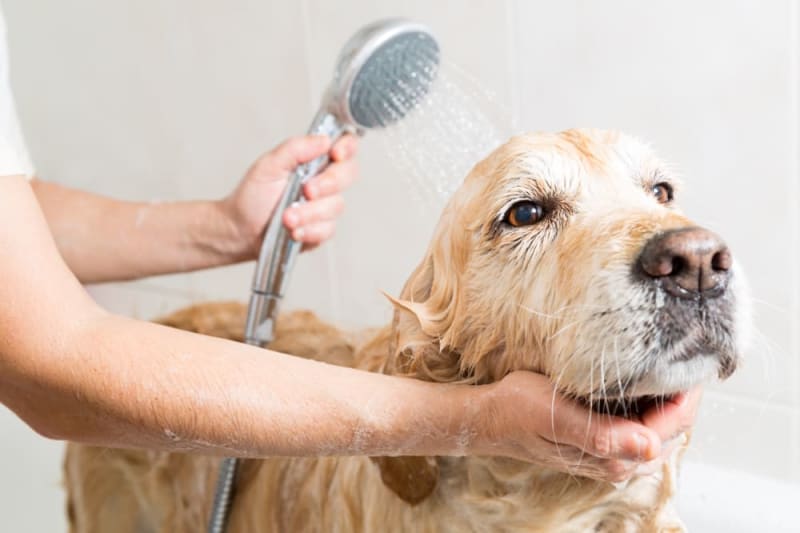
When Boone was finally ready for water, I changed everything about my approach. I stopped using the bathtub. It was too deep, too slippery, and too enclosed. I bought a raised grooming tub for the backyard, but a large storage bin or a walk-in shower works just as well. The key is non-slip. I line the surface with a rubber mat so his paws grip. A dog who is slipping is a dog who is panicking.
I brush him thoroughly before the water touches him. Wet mats tighten and become impossible to remove without cutting. I use lukewarm water—test it on your wrist like a baby bottle. I wet him from the neck down, keeping water out of his ears and eyes. I dilute the shampoo according to the label; concentrated shampoo is hard to rinse and leaves residue that itches. I massage it in with my fingertips, not a rough brush. Then I rinse until I am certain every bubble is gone. Leftover shampoo causes hot spots and dermatitis.
I dry him completely. This is the step I used to skip because he would shake and I would give up. Now I towel-dry aggressively, then use a low-heat hair dryer on the cool setting, held at a distance, while I brush against the grain. Damp skin under a thick coat is a breeding ground for yeast and bacteria. Boone once developed a hot spot on his hip because I let him air-dry in his crate. Never again.
Step 4: Trim Nails Without Drawing Blood
This was my white whale. Boone’s nails had gotten so long that the quick—the blood vessel inside the nail—had grown out with them. Trimming them to a healthy length required millimeter-by-millimeter cuts over weeks, not a single dramatic chop.
I use a guillotine-style clipper for his thinner nails and a Dremel-style grinder for the thicker ones. The grinder is slower but safer; you remove tiny amounts and can see the quick before you hit it. I do one paw per session, not all four. I trim after exercise when he is naturally tired. I hold the paw firmly but gently, cut at a forty-five-degree angle below the quick, and immediately treat and release. If I nick the quick and it bleeds, I use styptic powder or cornstarch, apply pressure, and stay calm. My panic used to make his panic worse.
For dogs with black nails where you cannot see the quick, I use the “nibble” method. I take off the tiniest sliver and look at the center of the cut surface. If it is white or gray, I can go a bit more. If I see a black dot in the center, that is the quick. I stop immediately.
Step 5: Clean Ears Weekly (And Know What Normal Looks Like)
Boone’s ear infection was my fault. I had never looked inside his ears. I did not know that a healthy dog ear is pale pink, clean, and odorless. His were red, waxy, and smelled like stale corn chips. By the time I noticed, the yeast had colonized the canal.
Now I check his ears every Sunday. I lift the flap, look for redness, swelling, or discharge, and smell them. If they smell like yeast or look dirty, I fill the canal with veterinary ear cleaner, massage the base for thirty seconds to break up debris, let him shake his head (which flings the dissolved gunk out), and then wipe the visible outer ear with a cotton ball. I never use Q-tips. They push debris deeper and can rupture the eardrum. I also never use water or homemade solutions. The ear canal needs a product that dries completely. Trapped moisture causes the exact infections you are trying to prevent.
Step 6: Brush Teeth Like You Mean It
Dental disease is the most common preventable illness in adult dogs, and I ignored it because Boone hated having his mouth touched. By age four, he had early tartar buildup and gingivitis. The vet told me that untreated dental disease does not just cause bad breath. It seeds bacteria into the bloodstream, damaging the heart, liver, and kidneys.
I started with flavored enzymatic toothpaste—poultry flavor, which sounds disgusting but makes Boone think I am feeding him a treat. For the first week, I let him lick it off my finger. The second week, I rubbed it on his front teeth with my finger. The third week, I introduced a soft finger brush. Now, six months later, he tolerates a small canine toothbrush for thirty seconds a day. I focus on the outer surfaces of the back molars where tartar builds most. I do not aim for perfection. I aim for consistency. Thirty seconds of daily brushing prevents more disease than an annual professional cleaning under anesthesia.
Step 7: Brush the Coat According to the Coat
Boone has a medium double coat that sheds year-round and blows out seasonally. I used to brush him whenever I remembered, which meant I was always behind the fur. Now I brush him three times a week with an undercoat rake during shedding season and once a week with a slicker brush the rest of the year. Brushing removes dead hair, distributes natural oils, and lets me check for lumps, ticks, hot spots, and parasites.
For short-haired dogs, a rubber curry brush once a week removes dead skin and stimulates circulation. For long-haired or curly-coated dogs, daily brushing with a pin brush and comb is non-negotiable. Mats form at the skin and tighten like a tourniquet. They cause bruising, limit movement, and hide infections. If you cannot run a comb from root to tip, you have a mat. Cut it out carefully with blunt-tipped scissors or clippers, never by pulling.
Step 8: Build a Weekly Rhythm That Prevents Crises
Grooming is not a quarterly event. It is maintenance. I do a full check every Sunday: eyes, ears, teeth, nails, coat, skin, and paws. I bathe him every four to six weeks, or immediately if he rolls in something foul. I brush teeth daily. I trim nails every two weeks, one or two paws at a time. This takes me about twenty minutes of active work per week, spread across short sessions. It is infinitely less stressful than the all-day grooming marathons I used to attempt after months of neglect.
5 Mistakes That Turn Grooming Into a Nightmare
These are the specific errors that cost me money, caused Boone pain, and made us both dread grooming.
1. Waiting until the pet is filthy or overgrown. Neglect turns a five-minute brush into a two-hour dematting session. It turns a simple nail trim into a surgical quick-trimming procedure. Maintenance is easier, cheaper, and kinder than correction.
2. Using human products. Shampoo, toothpaste, and ear cleaners made for humans can harm or poison your pet. The pH is wrong. The ingredients are toxic. The fragrances irritate. Buy species-appropriate products and read the labels.
3. Forcing the pet through fear. I used to hold Boone down while my partner clipped his nails. He screamed. We finished the job, but we destroyed his trust. Now, if he shows stress signals—lip licking, yawning, whale eye, trembling—I stop. We go back to step one. Forcing a terrified animal creates trauma that takes months to undo.
4. Bathing too often or not drying completely. Over-bathing strips oils and causes skin issues. Under-bathing lets bacteria and allergens accumulate. And a damp dog is a dog with a skin infection waiting to happen. Dry thoroughly every single time.
5. Ignoring the paws, pads, and sanitary areas. I used to focus only on the coat people could see. But the fur between paw pads collects ice, salt, and burrs. The fur around the rear end gets soiled and causes urinary tract infections and maggot infestations in summer. I now trim the paw pads and sanitary fur monthly with blunt safety scissors. It takes three minutes and prevents serious problems.
Real Examples: What a Grooming Session Looks Like Now
To show you this is not theory, here is what I did with Boone last Sunday.
I started with the ear check. I lifted his right flap. Pale pink, clean, no odor. I gave him a treat. Left ear: a tiny bit of brown wax at the entrance. I filled the canal with cleaner, massaged, let him shake, and wiped with a cotton ball. Done.
Next, nails. He had a morning walk, so he was tired. I did his front paws only. The grinder hummed. I took off two millimeters per nail, checking the center after each. No quick exposure. Treat, praise, release. Back paws tomorrow.
Then the coat. I used the undercoat rake because he is blowing his winter coat. I filled a trash bag with loose fur. While brushing, I found a small scab on his flank—probably a bug bite. I noted it. If it is not healed by next week, I will call the vet. That is the hidden value of grooming. You catch things early.
I did not bathe him because it has only been three weeks and he is not dirty. I did brush his teeth that evening while he was sleepy on the couch. Thirty seconds. He licked the poultry paste off the brush and let me run it along his molars.
Total active time: about eighteen minutes, not counting the tooth brushing. Total stress for either of us: minimal.
Frequently Asked Questions
How often should I bathe my dog?
Most dogs need a bath every four to six weeks. Active outdoor dogs may need one every two to three weeks. Dogs with skin conditions may need medicated baths weekly as prescribed by a vet. Over-bathing causes dry skin and coat damage. Under-bathing allows oil, dirt, and allergen buildup. Judge by smell, coat texture, and lifestyle, not by a rigid calendar.
Can I use human shampoo on my pet in an emergency?
Only if you have absolutely no alternative, and even then, you should dilute it heavily and rinse for twice as long. Human shampoo is too acidic and too harsh for pet skin. It strips protective oils and can cause dermatitis. Buy a gentle dog shampoo and keep it on hand. It costs less than one vet visit for a skin infection.
My dog hates having his nails trimmed. What do I do?
Stop forcing full trims. Start over with desensitization. Touch the paw, treat. Hold the paw, treat. Touch the clipper to the nail, treat. Clip one nail, treat, and end the session. Use a Dremel if the sound does not scare them; it is slower but less likely to cause pain. If your dog is truly phobic or aggressive, consult a fear-free certified groomer or veterinary behaviorist. Sedated nail trims at the vet are better than a lifetime of terror.
How do I clean my dog’s ears without hurting him?
Use a veterinary-formulated ear cleaner, not water or homemade solutions. Fill the ear canal, massage the base gently for thirty seconds, let the dog shake, and wipe only the outer ear with a cotton ball. Never insert anything into the canal. Clean weekly if your dog has floppy ears or swims often; monthly if they have upright ears and stay dry.
Do I really need to brush my pet’s teeth, or are dental chews enough?
Dental chews help, but they are not enough. Brushing daily removes plaque before it hardens into tartar. Once tartar forms, only a professional dental cleaning can remove it. Daily brushing takes thirty seconds and prevents periodontal disease, tooth loss, and organ damage. It is the single most impactful health habit you can add to your routine.
Conclusion: Grooming Is Love in Maintenance Form
I used to think that taking Boone for long walks and feeding him good food was enough. I thought grooming was something for show dogs and Instagram accounts. I was wrong, and Boone paid the price with infected ears, overgrown nails, and dental disease that could have been prevented. Grooming is not vanity. It is the physical maintenance that allows our pets to move comfortably, breathe without pain, and live without preventable infections.
The good news is that you do not need to be a professional groomer. You do not need a show-ring finish. You need a routine, the right products, and the patience to go slow. Start with one thing this week. Check the ears. Brush for five minutes. Give the teeth a single swipe with poultry paste. Build from there. Your pet will not become a grooming enthusiast overnight. But they will learn to tolerate it. And eventually, if you are consistent and gentle, they will learn to trust your hands.
Boone still does not love the bath. But he walks to the tub on his own now. He offers his paws for nail trims because he knows chicken follows. He lets me lift his lips and brush his molars while he dozes. That trust took months to build. It was worth every minute. Because a clean dog is not just a nice-smelling dog. He is a healthy, comfortable, happy dog. And that is what he deserves.