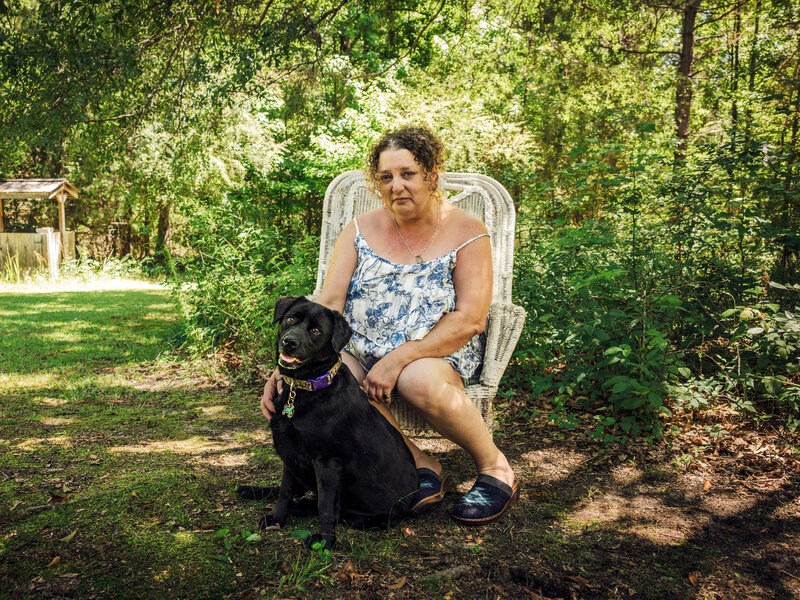
I will never forget the Tuesday afternoon when my neighbor knocked on my door to tell me that my dog had been barking for three hours straight. I had been at work, trying to hold down a job while managing a dog I was increasingly afraid of my own home. When I walked inside, the blinds were shredded. A puddle of urine sat in the hallway. My dog, a sweet-faced rescue mutt named Boone, was panting in the corner with his eyes wide and his body trembling. I did not see a bad dog in that moment. I saw a terrified one. And I saw myself as the person who had failed him.
For the six months prior, I had been locked in a cycle of desperation. I watched YouTube videos about being the “alpha.” I bought a prong collar because a trainer at the pet store said Boone was “dominant” for pulling on leash. I tried treat training, but when he saw another dog on the street, he was so overstimulated that he ignored the highest-value chicken I could offer. I signed up for a six-week obedience class where he learned to sit in a quiet room but still lost his mind at the front door. I was exhausted, embarrassed, and convinced that I was simply not cut out to be a dog owner.
The breakthrough did not come from a new training technique. It came from a veterinarian who asked me a question no one else had bothered to ask: “How is he sleeping?” I stared at her. I had never thought about my dog’s sleep. I had thought about his behavior. I had thought about his training. I had never connected the two. She explained that Boone was chronically sleep-deprived, anxious, and likely in low-level pain from poor muscle tone. He was not defiant. He was overwhelmed. And no amount of correction or cookie-bribing would work until his basic care needs were met.
That conversation changed everything. I stopped treating training and care as separate departments. I realized they are the same thing. Care is the foundation. Training is the communication. You cannot build one without the other. If you are struggling with a pet who seems stubborn, anxious, destructive, or simply unresponsive, I am writing this because I have been there. And I am going to show you exactly how I rebuilt my relationship with Boone from the ground up.
Why Training Fails When Care Is Missing
Here is the mistake most of us make. We think pet care is the boring stuff—food, water, vet visits, the occasional bath. And we think training is the exciting stuff—tricks, obedience, stopping bad behavior. We hire trainers to fix the pulling, the barking, the jumping. We buy special collars and watch viral videos. But when the behavior does not change, we blame the dog. Or we blame ourselves for being inconsistent.
The truth is that behavior is information. A dog who pulls on the leash is not necessarily trying to dominate you. He might be under-exercised, anxious about the environment, or uncomfortable in the equipment you are using. A dog who pees in the house is not spiteful. He might have a urinary tract infection, an inconsistent schedule, or a fear of the outdoors. A dog who barks at strangers is not protective. He might be terrified and trying to create distance because he has no other coping skills.
When you try to train a dog whose physical, emotional, or medical needs are unmet, you are trying to teach algebra to someone who has not slept in two days. It is not a training problem. It is a care problem. And until you address the care, the training will always be an uphill battle.
Step-by-Step: The Integrated Care and Training System
This is not a list of tricks. This is a framework for understanding your pet as a whole being and building a life together that makes good behavior the natural outcome. I used this with Boone, and it is what I recommend to anyone who asks me for help.
Step 1: Run a Full Health and Wellness Audit
Before you label any behavior as a training issue, rule out physical causes. I took Boone to the vet for a full exam, bloodwork, and a dental check. It turned out he had early-stage arthritis in his hips and a food sensitivity that was causing low-grade inflammation. He was uncomfortable, and discomfort manifests as irritability, reactivity, and inability to focus.
If your pet is suddenly acting out, schedule a vet visit. Ask specifically about pain, allergies, vision, hearing, and thyroid function. For cats, rule out urinary issues, which are the hidden cause of so-called “behavioral” house soiling. For dogs, consider whether their diet is actually supporting their brain and body. I switched Boone to a high-quality, limited-ingredient diet, and within three weeks, his baseline anxiety dropped noticeably. He was not a different dog. He was finally able to be the dog he was.
Also audit sleep. Dogs need twelve to fourteen hours of sleep per day. Puppies and seniors need more. If your dog is in a busy household with no quiet space, if kids are constantly interacting with him, if he is crated in the living room where the TV blares until midnight, he is not resting. I created a covered crate in a spare room with white noise. Boone began sleeping deeply for the first time since I adopted him. Everything else got easier after that.
Step 2: Build a Predictable Routine That Creates Security
Animals thrive on predictability. Uncertainty creates anxiety. Anxiety creates reactivity. Reactivity creates the behaviors we call “bad.” I used to have a chaotic schedule. Sometimes Boone got a walk at 6 a.m., sometimes at 8 a.m., sometimes not at all if I was busy. Sometimes he ate at 7 p.m., sometimes at 9 p.m. He never knew what was coming, so he was always on high alert.
I built a rigid daily routine. Not because I am rigid, but because Boone needed the structure to relax. Wake-up at 6:30. Outside for potty. Breakfast in a puzzle feeder. Calm settle time while I get ready. A thirty-minute decompression walk at 7:30. Then he goes to his quiet space with a frozen Kong while I work. Lunchtime potty break. Afternoon training session for ten minutes. Evening walk. Dinner. Chew time. Bedtime in the quiet room by 9:30.
Within two weeks of this routine, his separation anxiety decreased by half. Not because I trained him to be alone. Because he trusted that I would come back. The routine made the world predictable, and a predictable world is a safe world.
Step 3: Learn to Read Your Pet’s Actual Language
We are terrible at this. We see a wagging tail and assume happiness. We see a dog lying down and assume relaxation. But a wag can be stress. A down-stay can be a shutdown. I spent months misreading Boone’s signals because I was looking at the obvious parts and missing the subtle ones.
I learned to watch his ears, his mouth, his tail carriage, and his muscle tension. When Boone was comfortable, his ears were neutral, his mouth was soft, his tail hung in a gentle curve, and his weight was evenly distributed. When he was anxious, his ears pinned slightly back, his mouth tightened, his tail rose and stiffened, and he shifted his weight forward. When he was frightened, he froze, his pupils dilated, and he avoided eye contact.
I also learned his specific triggers. Not all dogs are afraid of the same things. Boone was not afraid of loud noises. He was afraid of direct eye contact from strangers. He was afraid of being cornered. He was afraid of being touched on the top of his head. Once I knew his language, I could advocate for him. I could tell strangers not to lean over him. I could position myself between him and a trigger. I could remove him before he went over threshold. Training became possible because he was no longer in survival mode.
Step 4: Choose One Clear Communication System
Dogs do not speak English. They learn through consistency, tone, and consequence. I used to talk to Boone in full sentences. “Boone, come on, buddy, you know this, come here, good boy, please?” That was noise. He tuned it out. I also used inconsistent cues. Sometimes “down” meant lie down. Sometimes it meant get off the couch. Sometimes I said “off” for the couch. He was confused, and confusion looks like disobedience.
I simplified to a single-syllable marker system. “Yes” meant exactly one thing: you did the right thing, and the reward is coming. I paired it with a treat every time for two weeks until it was etched in his brain. Then I used it to shape behaviors. When he glanced at me instead of barking at a dog, “yes” and treat. When he chose his bed instead of pacing, “yes” and treat. When he offered a sit at a crosswalk, “yes” and treat.
For behaviors I wanted to stop, I used management, not correction. If he jumped on guests, I leashed him before they entered and rewarded four paws on the floor. If he counter-surfed, I kept the counters clear and rewarded him for staying on his mat. I stopped saying “no” a hundred times a day. “No” is just noise unless you have taught the “yes.” Teach what you want. Prevent what you do not. That is the entire system.
Step 5: Train the Life Skills, Not Just the Tricks
Sit and stay are nice for photos. But the skills that actually determine whether you and your pet can live together peacefully are different. I call them the Big Four: Settle, Recall, Leash Comfort, and Alone-Time Coping.
Settle: The ability to relax in the presence of stimulation. I taught Boone to go to his mat and lie down on cue. Then I practiced it while I cooked, while the doorbell rang on TV, while kids played outside. The mat became a safe zone. When his brain was spinning, I could send him to the mat, and he knew the job was to chill.
Recall: Coming when called is not about obedience. It is about safety. I built it in a boring, empty room first. I said “Boone, come,” in a happy voice, and when he took one step toward me, I marked “yes” and gave a jackpot of treats. I never called him to me to do something he hated—like nail trims or leaving the park. I called him, rewarded massively, and often released him back to play. Coming to me became the best bet in his world.
Leash Comfort: I threw away the prong collar. It was suppressing his behavior by causing pain, which increased his anxiety, which made his reactivity worse. I switched to a well-fitted front-clip harness. I stopped trying to make him walk in a perfect heel. I taught him that a loose leash meant forward movement, and tension meant we stopped. We practiced in the driveway, then the quiet street, then the busier block. It took months, not days. But he walks calmly now because he understands the game, not because he is afraid of the equipment.
Alone-Time Coping: This was the hardest. I started with one minute. I put him in his quiet room with a frozen Kong, walked out, closed the door, and immediately returned. Then two minutes. Then five. I never made a big deal about leaving or coming back. I built the duration so slowly that he never had a chance to panic. After three months, he could handle four hours alone without destruction or distress.
Step 6: Make Physical and Mental Exercise Non-Negotiable
I mentioned this in my enrichment article, but it bears repeating here because it is the engine that makes training possible. A tired body and a satisfied brain are trainable. A wired body and a bored brain are not. Boone needs a minimum of forty-five minutes of physical exercise and twenty minutes of mental challenge daily. On days he gets that, he is a dream to live with. On days he does not, he is a nightmare. There is no shortcut.
For physical exercise, I do not just mean a slow stroll around the block. He needs to move at his own pace, sniff, explore, and occasionally run. For mental exercise, we do training games, scent work, and puzzle feeders. The combination is what settles him. One without the other is incomplete.
5 Mistakes That Undermine Care and Training
These are the specific errors I made that kept Boone and me stuck in a cycle of failure.
1. Treating training as a punishment for bad behavior. I used to wait for Boone to do something wrong and then try to correct it. That is not training. That is reacting. Real training is proactive. You set the environment up for success, you reward the behavior you want, and you make the unwanted behavior irrelevant or impossible.
2. Being inconsistent with rules. For two weeks, Boone was allowed on the couch because I felt guilty about his anxiety. Then I got annoyed and kicked him off. Then my partner let him up again. He was not being stubborn. He was confused. Consistency is kindness. If the rule is no couch, it is no couch for everyone, every day. If the rule is okay, it is okay. Mixed messages create anxiety.
3. Ignoring physical discomfort during training. I once spent a month trying to teach Boone to lie down reliably. He would not do it on hard floors. I thought he was being difficult. Then I realized his hips hurt on the tile. I put a mat down, and he dropped into a down instantly. If your pet is resisting a behavior, ask if it physically hurts before you assume it is behavioral.
4. Expecting adult-level performance from a puppy, a rescue, or a traumatized pet. Boone had been a stray. He had no concept of indoor living. I expected him to understand house rules in a week. That was absurd. I now measure progress in months and years, not days. Puppies need time for their brains to develop. Rescues need time to decompress and trust. Trauma does not undo itself because you are impatient.
5. Skipping exercise and enrichment and expecting obedience. I cannot say this strongly enough. You cannot train a dog who is not physically and mentally fulfilled. It is like trying to teach a child to sit still at a desk when they have not had recess. Exercise is not a reward for good behavior. It is the prerequisite for it.
Real Examples: What a Successful Day Looks Like
To show you this is not abstract, here is a real weekday with Boone now. Not a perfect day. A normal day.
6:30 a.m.: Wake up. Outside for potty. He comes back in, and I prepare his breakfast in a slow feeder. He works for ten minutes. Then he settles in his bed while I shower.
7:30 a.m.: A forty-minute walk. Not a power march. A sniffari. He leads. I follow. He checks his pee-mail. We practice two or three loose-leash recalls when he gets ahead. I mark “yes” and treat.
8:30 a.m.: I leave for work. He goes to his quiet room with a frozen Kong and white noise playing. No drama.
12:30 p.m.: A dog walker comes. He gets a twenty-minute potty break and a short walk. She texts me a photo.
5:30 p.m.: I come home. I ignore him for two minutes so my arrival is not a frantic event. Then we go outside.
6:00 p.m.: A ten-minute training session. Tonight we are practicing “place” with distractions. I drop a toy near his mat. If he stays, “yes” and treat. We do five repetitions. He is tired but engaged.
7:00 p.m.: Dinner in a puzzle toy. Then a chew on a bully stick while I cook.
8:30 p.m.: A calm evening walk. Just ten minutes. Then settle on the couch. He lies on his mat nearby. We watch a show.
9:30 p.m.: He goes to his quiet room. Lights out. He sleeps until morning.
That is it. No drama. No destruction. No barking. Not because he is a different dog. Because his needs are met, his communication is clear, and he trusts the rhythm of his life.
Frequently Asked Questions
How long does it actually take to train a dog?
It depends on the dog, the skill, and your consistency. Basic manners like sit and down can be learned in days. Reliable recall and leash comfort can take months to years. Behavioral issues rooted in fear or trauma can take six months to two years of steady work. The question is not how fast you can train. It is how consistent you can be. Slow and steady always beats fast and sloppy.
Can you train an older rescue dog, or is it too late?
You can absolutely train an older dog. In many ways, they are easier than puppies because they can focus longer. The caveat is that you may be undoing years of learned behavior or trauma, which takes patience. Boone was three when I adopted him. He was seven by the time he became the dog I describe. It was worth every month.
Should I use treats, praise, or toys as rewards?
Use whatever your individual dog values most. For Boone, it is food and sniffing access. For some dogs, it is a tennis ball or a tug toy. For others, it is verbal praise and physical affection. The key is that the reward must be valuable to the dog in that moment. A dog who is terrified of another dog will not take a treat. But he might work for distance from the threat. Know your dog’s currency.
Why does my dog only listen when he wants to?
Usually because the behavior has not been proofed. He knows “sit” in your living room with no distractions. He does not know “sit” at the park with squirrels and smells. You have to practice every behavior in gradually more challenging environments. Also, check whether he is physically uncomfortable, overstimulated, or unclear about the cue. “Not listening” is almost always “not understanding” or “not able.”
When do I need to hire a professional trainer?
If you are dealing with aggression, severe fear, resource guarding, or separation anxiety that is not improving with basic management, hire a certified professional. Look for credentials from organizations like the CCPDT or IAABC. Avoid anyone who uses dominance theory, physical corrections, or guarantees quick fixes. A good trainer teaches you to read your dog and build skills. They do not fix your dog for you.
Conclusion: Care Is the Training, and Training Is the Care
I spent a year trying to “fix” Boone with techniques. I bought the collars. I watched the videos. I said “no” until I was hoarse. None of it worked because I was treating the symptoms and ignoring the organism. When I finally stepped back and asked what he actually needed to thrive—sleep, comfort, security, clarity, exercise, and patience—the behaviors I hated began to dissolve on their own.
Pet care and training are not separate categories. They are the same living practice. You cannot train a dog who is in pain, sleep-deprived, or anxious. You cannot care for a dog without teaching him how to navigate the human world. The two are inseparable threads, and when you weave them together, you get something stronger than obedience. You get trust.
If you are where I was—standing in a hallway of shredded blinds, holding a bag of treats that your dog is too stressed to eat, wondering if you made a terrible mistake—please hear this. Your dog is not broken. And you are not failing. You are just missing the foundation. Start with health. Build a routine. Learn his language. Communicate clearly. Meet his needs. The training will follow. It always does.
Boone is eight now. He sleeps at my feet while I write this. He has not destroyed anything in three years. He comes when I call. He walks calmly past dogs on the street. He can be left alone without panic. Not because I am a great trainer. Because I finally became a good caretaker. And that made all the difference.